Lessons ? Practise ? Why bother?

“Why bother with lessons and practise? I cast well enough to catch fish nearly every time I go out ?”. This was my response some 15 years ago, when a fishing mate suggested we share a lesson.  Proud of my skills back then,  I couldn’t see the sense in standing in a park making the same cast after cast, endlessly, monotonously.  Especially when I spent most of my time fishing streams and rivers.  My older wiser self, would now side with my mate on this one, and has a few answers to that question.  However I am not sure my younger self would have listened or understood.

I have no idea what his response was, but I remember being sceptical, and it was probably only the promise to go fishing afterwards that finally convinced me to join him.  I remember it was a very windy day, the coach was an experienced angler and had me working on getting rid of the tailing loops that annoyingly and reliably appeared every time I strived for distance. I still remember his sage advice (and his Sage advice), “try not to grip and rip, try to feel the cast”.  When I asked him how , he suggested I try a rod with a more forgiving action.  I tried his Sage SLT 5 weight, I loved it.  It did help, but I still didn’t understand how to develop feel. Also, whilst I am certain this was not his intention,  I took this to mean a new rod would make me cast better. It didn’t.  (Good rod though, glad I bought it, glad I still have it !). Sadly (for me), I didn’t pursue any more lessons with him or anyone else, and forgot about it for a while, enjoying myself nonetheless.

Why I finally took lessons

Five years on, and I was living in London,  trying to learn Italian, and on advice from my language teacher, I took to reading websites in Italian, on something that interested me (fly fishing unsurprisingly).  In this way, one spring day, whilst on vacation,  I found myself fishing on one of the rivers in Umbria in central Italy with some guys from the SIM Italian fishing association.  The river was fast and clear, and I had some great success fishing weighted nymphs.  One of my hosts suggested I try casting a dry near the far bank, where he claimed there were some big ones hiding under the overhanging shrubs.  I probably put at least 50 or more casts over there, landing the dry in the current seam, only to have it whipped away by the current.  At this point I declared, that :

  1. Clearly there were no fish there, and
  2. Even if they were there it was impossible to fish the spot, the drag was horrendous.

My host, didn’t seem fazed and made a leisurely cast across the current, his fly landed, and sat… and sat…. for at least a count of 3, before a sizeable hole opened up beneath it.  A relaxed lift of the rod, and the hook was set into the biggest fish I’d seen all day.  He did it twice more to prove it wasn’t a fluke.  He presented that dry-fly with studied precision, and injected just enough slack in the leader to let it hang enticingly in the still water. I begged him to tell me how he did it. Easy , he said, come to a course, and you can learn. Here was an art, and an art worth my learning (sorry for misquoting Mr Walton). I now had an  answer to that question of a few years before. Why take some lessons: to learn some skills to catch fish, good fish, that I otherwise couldn’t !

It was through the Italian SIM association I learned there was a whole lot more to fly-casting and fly fishing than laying a line out straight and accurately. Their approach to fly-casting is all about casts that catch fish, controlling the line, leader and fly to present the fly, in and around and under obstacles, combatting swirling currents to maximise the natural drift. Over the next few years I attended 6 or so courses, improving bit by bit, discovering the joy of playing around with rod and line.  Even more so on the river, where there is a lot of satisfaction to be had making a difficult cast, even better if a fish cooperates.  Another answer to my question : Have more fun!

How to Practise

None of this came without practising between the courses.  Not just any practice either, what is needed is focused practice. For example, when I was on a golfing crusade to earn a single figure handicap. I used to hit a bucket of balls at the driving range twice a week thinking this would really help, until a conversation with my golf-pro. He asked me how I practised, “I take my driver twice a week at the range” I said. “Hmm” he replied, “you drive quite well, but what about the rest of your game? Chips, putts ? fades ? draws ? High shots low shots ? Practise the shots you use most on the course. Spend half your time on your short game, half the rest on the short irons, and then rest on long irons and woods.” Good advice , practice the skills you need!

I advocate applying this approach to fly-casting. In the off-season I practise at least once a week for an hour or two at a time.  I make a rough plan for each session , I go with the intention of working on a four or five skills in particular. I break up my practice time and spend no more than 10 – 15 minutes on each skill.

Don’t be afraid to take a few lessons.  If you are in Melbourne we have casting lessons available. Click here.

Try it for yourself: you may catch more fish and may have more fun doing so!

Practise Drills for Fly Casting:

Loops and line control:

  1. Loop control : Try making false casts with consistent smooth loops. 3 or 4 casts then rest. Try doing this at different distances.
  2. Loop size: Practice casting tight loops, medium-sized loops, wide loops.
  3. Rod plane: try casting on various rod planes. from vertical, to horizontal and angles between. Concentrate on timing and making clean smooth loops.
  4. Double hauling.

Presentation Casts:

If you have learned how to do these, practice and perfect them, if not consider hitting me up for a lesson or three:

  1. Curved casts
  2. Wiggle casts
  3. Bucket Casts
  4. Aerial Mends

Accuracy:

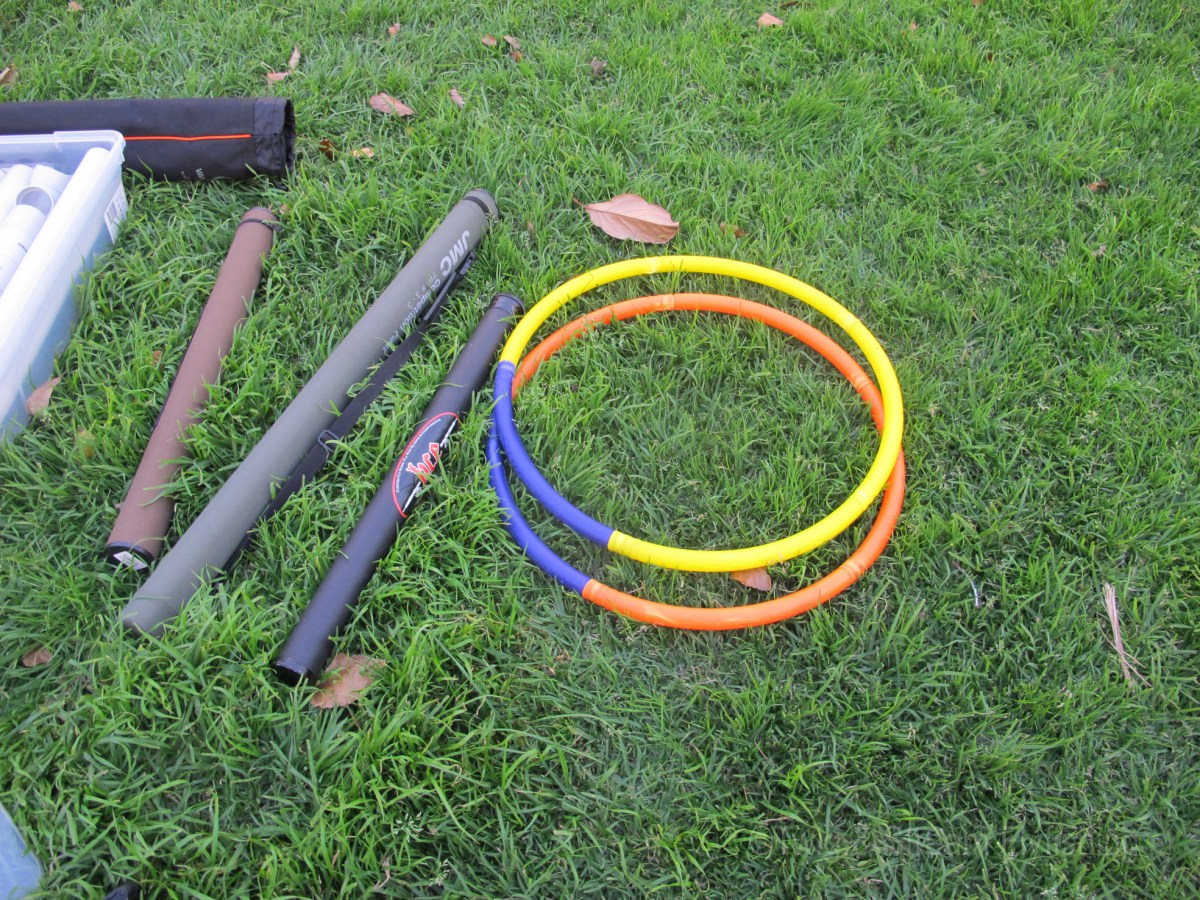
  1. Simple accuracy I take a few hoops or targets with me, and set them up at various typical fishing distances, and practice a few casts at each , then try the next one, trying always to judge the distance by eye. I move around so the distance is never the same.  On the river you don’t know the distance in advance!
  2. Altering the plane: e.g. Side casting to a target, simulating casting low under overhanging foliage , yet still hitting the target.
  3. Presentation cast accuracy (curve, bucket, wiggle) : Using a hoop, I imagine that I need to make a presentation cast to some slack water, the loop is the target.
  4. Reverse cast (over your other shoulder)
  5. Other hand if you know how


On Water:

If you have suitable water nearby, try practising:

  1. Roll casts (and single-handed spey techniques )
  2. Mending
  3. Different presentations ( fly first, gentle)
  4. Different retrieve patterns (etc.)

Here are a couple of videos from my practice sessions

Choosing a Fly Rod for Beginners

The fly rod is probably the most important item of your equipment and is generally the most expensive. But as it can influence your first few years of fly fishing in either a positive or negative way it is important to make a good choice. Whilst most reputable fly shops will give you good advice, it is best to go in well informed.

Firstly know:

  • What you are fishing for,
  • Where you will fish
  • How much money you have to spend

Now all you need to pick is a rod that

  • matches what, where and how you fish (rod weight and length),
  • is the best quality within your budget
  • has an action that suits you,

Rod Weight

You need to choose a rod weight suitable for the type of fishing you will do.  Rods are given a number that signifies the line weight the rod manufacturer recommends.  Line weights start at 1 weight, and progress incrementally through to 14 weight, the smaller the number the lighter the rod. Your choice should be based on the size, power and weight of fish you intend to target.  The bigger the fish, the more powerful the rod (and heavier the line weight)  required.

Fish Size/Species Rod Weights
Small stream trout #1 – #5
River trout #4 – #7
Large freshwater fish (Rivers/Lakes e.g. Steelhead, Carp, salmon or Cod or Smaller Saltwater Species – Kawhai/Barramundi/Bonefish #6 – #10
Larger Saltwater Species – Queenfish/Giant Trevally/Sharks #9 – #14

Rod Length

Rods come in a range of lengths to suit a range of applications, but a generally the further you need to cast, the longer the rod. A rough guide follows:

Application Length
Small Streams 7 – 8 ft
Rivers 8 – 9 ft
Lakes/Saltwater 9 – 10 ft

Specialist applications will require specific lengths/weights (e.g. Euro nymphing uses long light rods).

Price and Quality

Rods come in a range of prices and quality.  You could spend as little as $60 or as much as $1200 on a fly rod. While price is not a guarantee of quality, you generally will get what you pay for.

The premium rod brands, spend a lot of time and money on research and rod development.  Generally their rod blanks  have the latest technology, are stronger and lighter.  They usually have very good warranties –  some are even lifetime warranties – and they will generally repair or replace our rod for a small fee.

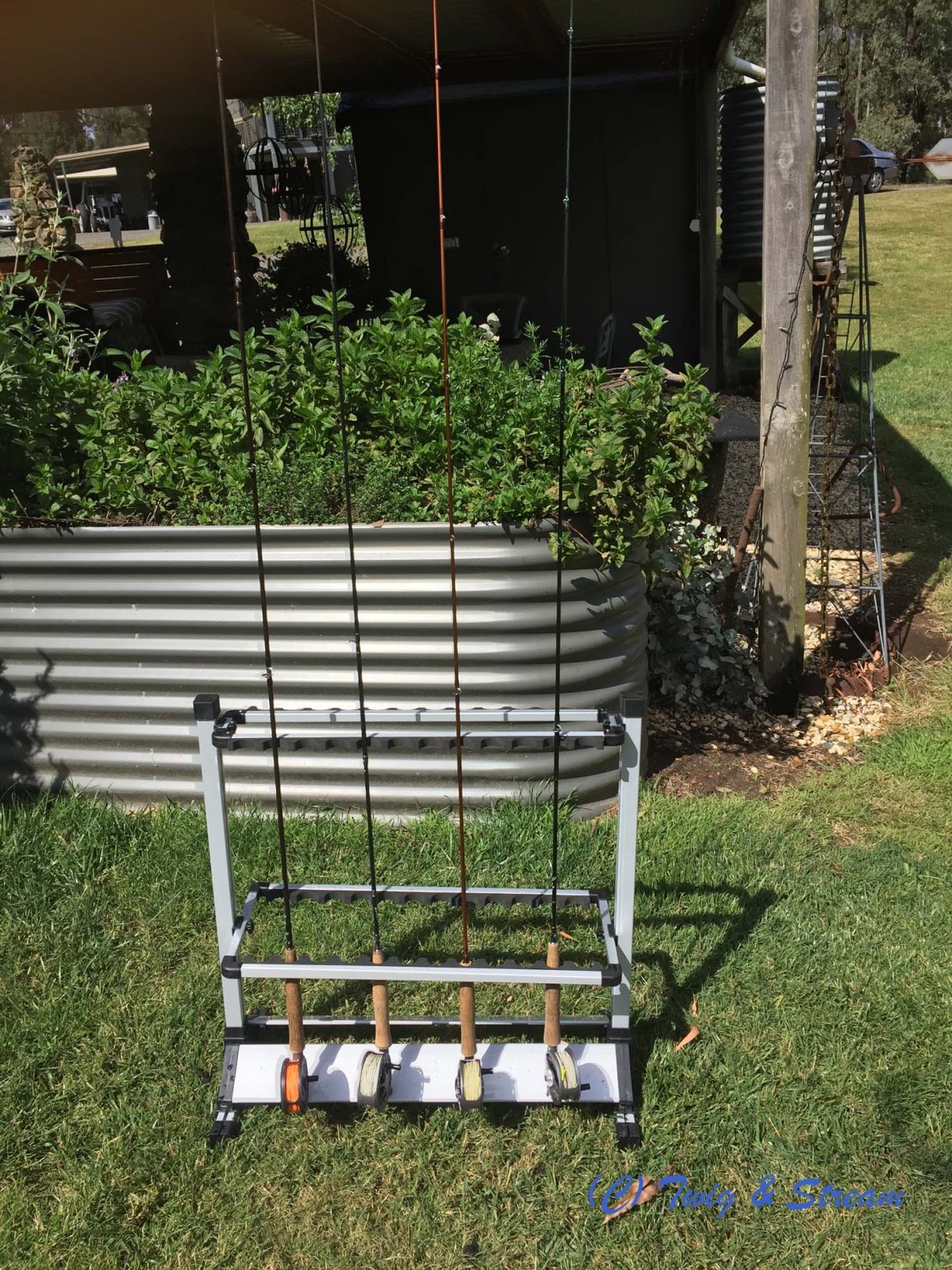
There is quality in the the components that are used to make the rod, the cork in the grip, the reel seat, and the line guides. How evenly and evenly and finely the thread that holds the guides is wrapped, is also another indicator of quality.  On the cheaper end of the market, you get some poorly designed or made rod blanks. These may cast poorly and often break too easily.You can see the varying quality in the photos below.

How much should you spend ? You can spend anything up to $1200 AUD to buy a rod, but you do not have to do so to get a quality fishing rod that suits you. Nearly every rod that retails under $100 will be poor quality, if you test a lot of these you may get lucky, but don’t waste your time.  On the other hand don’t buy the latest most expensive rod in the shop thinking it will be the best. Buy the best quality rod that fits your budget and try before you buy. Try casting a few different rods side by side if you can. Then pick one you like that also fits your budget.

Rod Action

Rod action is how manufacturers try to explain how a rod much a rod bends and how quickly it unbends during casting and fishing. Rod design is quite complicated, however in general, rods can be classified into 4 groups:

Action Flex Description
Fast Tip The top 1/4 of the rod bends, and the rod unbends very quickly at the end of the casting stroke. The rod can be hard to feel, but requires a shorter quicker casting stroke, which makes it easier to cast tighter, and faster loops.
Med Fast Tip/Mid The top 1/3 of the rod bends, and the rod unbends quickly at the end of the casting stroke. The rod has more feel, requires a slightly longer stroke, but tight fast loops are still possible.
Medium Mid The top 1/2 of the rod bends, and the rod unbends slower. The rod has even more feel, requires a longer stroke, loop speed is generally slower. Tight loops require better tracking, and control.
Slow Tip Generally the rod bends all the way through its length, and the rod unbends quite slowly. These rods have a lot of feel, but require very good timing and tracking to make good casting loops. It is easy to over power these rods and generate tailing loops.

For a beginner I  recommend Medium or Medium Fast action rods, as they generally easier to learn with.  Timing the cast is a lot easier, as they can be cast with a slower rhythm and thus provide the beginner with more time to control the cast.  They also provide more feel or feedback  through the grip. You will feel a more a progressive change in pressure through the grip as the rod bends and un-bends.

Timing and feel are important for control of the line and leader.  Mastering these will begin to give mastery over accuracy,  distance and presentation. A medium or medium fast action rod, will make this journey easier and quicker.  A bonus is that these rods are more relaxing to use.

Some people will recommend fast action rods, this is mainly because it is harder to over-power them , and hence harder to throw a tailing loop.  But these rods generally require better timing and lack feel.  These rods are best for distance casting or casting on windy days.

Slower action rods are often favoured by people who like gentle slow presentations, in still conditions. Perhaps small still-waters, or slow streams, where a gentle presentation is required. It takes a very experienced caster to cast these rods well in windy conditions or over long distances.  Beginners will usually throw tailing loops that end in a tangle.

Conclusion:

You are now a little better informed, so decide for what, where and how you will fly-fish, know your budget, and head to your local fly fishing store.  The staff will be able to advise you on some options.  Please try a few rods side by side before you make your purchase. Enjoy, smooth casts, and clean tight loops!